
Two Foreign Employees Applied for China PR at Same Time—Yet Both Applications Were Returned
“Hello Maggie, our qualifications are quite similar, so why were both of our permanent residence applications returned?”
That was the question one foreign client asked our consultant Maggie over the phone last week.
What happened was actually quite interesting.
They came from the same company, and both of them began preparing their applications for China Permanent Residence—commonly known as the “China Green Card”—at almost exactly the same time.
From a background perspective, both were fairly typical applicants:
- They had worked in Shanghai for many years
- Their company had stable operations
- Their positions were considered core roles
- Their income levels met the application threshold
So at first, their expectation was quite simple:
“As long as we prepare the documents and submit them, everything should be fine.”
But unexpectedly, when the review results came out—both of their application files were returned.
What was even more surprising was this: the reasons for return were completely different.
One applicant’s file was returned because:
👉 there were discrepancies between the Individual Income Tax records and the salary certificate.
The other applicant’s file was returned because:
👉 there was an employment gap of about three months during a job change, which meant the requirement of “four consecutive years of employment” could not be established.
These two cases are actually highly representative.
Because in the understanding of many foreign nationals, the logic of applying for China Permanent Residence is often seen as:
meet the requirements → prepare the documents → submit the application → obtain approval
But in the actual review process,
the examination of permanent residence applications is far more detailed than many people imagine.
Many applications are returned not because the applicant is unqualified, but because of certain very easily overlooked details.
Based on several recent cases we have handled, we have summarized six key points that are most easily overlooked in 2026 China Permanent Residence applications.
If you are considering applying for a China Green Card, these details may be very important to you.
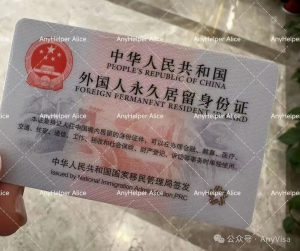
This is one of the most common issues we encounter in permanent residence applications.
When preparing documents, many applicants provide:
- Employment contract
- Company-issued salary certificate
- Bank salary statements
On the surface, the income appears to fully meet the standard.
However, in the actual review process, the reviewing authority often focuses closely on: the Individual Income Tax filing records.
Going back to the first applicant mentioned at the beginning of this article, his contractual annual salary was approximately RMB 800,000, which clearly met the application threshold on paper.
However, several issues appeared in his Individual Income Tax records, such as:
- Income in certain months being noticeably lower
- Bonus income not fully matching the Individual Income Tax declarations
- Differences between the tax data and the salary certificate issued by the company
These situations are actually quite common within companies, for example:
- Year-end bonuses being declared separately
- Adjustments to salary structure
- Part of the compensation being paid in the form of allowances
But under the review logic for permanent residence, the authority is concerned with only one core issue: whether your income is stable and genuine.
If there are obvious discrepancies between the Individual Income Tax records and the salary certificate, the applicant is very likely to be asked to provide supplemental explanations, or the file may even be returned directly.

For employment-based permanent residence, one very important requirement is: the applicant must have worked continuously in China for four full years.
However, many applicants overlook the word “continuously.”
The second applicant we encountered this time is a very typical example.
His overall background was actually very strong:
- He had worked in China for many years
- He held a management-level position within the company
- His income also met the application requirements
But in his employment history, there had been a gap of about three months when he changed jobs.
From a personal perspective, this is actually quite normal, for example:
- Taking a short break after leaving a job
- Waiting for the onboarding process at a new company
- Handling a visa conversion
But in the permanent residence review process, that gap means: the period of employment may not be recognized as “four consecutive years.”
As a result, his application file was returned during the review stage, and further explanations had to be provided.
This is also a detail that many applicants fail to recognize in advance.

When many foreign nationals consider applying for China Permanent Residence, they are familiar with only one application pathway.
But in reality, the common categories of China Permanent Residence applications include:
Employment-Based Permanent Residence
This category is suitable for foreign managerial personnel or technical professionals who have worked in China on a long-term basis. The review usually focuses on:
- Length of employment
- Income level
- Company background
- Tax payment status
Marriage-Based Permanent Residence
This category is suitable for foreign nationals who are married to Chinese citizens and have lived in China on a long-term basis. The review usually focuses on:
- Authenticity of the marriage
- Duration of the marriage
- Residence status in China
Doctoral Degree-Based Permanent Residence
In recent years, more and more overseas PhD holders have applied for China Permanent Residence through this pathway. The review usually focuses on:
- Authenticity of the degree
- Academic background
- Employment or research status in China
In fact, different types of permanent residence applications have different review priorities.
Therefore, before preparing any documents, it is very important to first determine the application pathway that best suits your situation.

Permanent residence application materials may appear numerous, but what the reviewing officer is actually verifying is one core question:
whether your identity and employment history are genuine and stable.
Therefore, all documents must be able to form a complete and coherent logic, such as:
- Passport entry and exit records
- Work visa history
- Employment contract
- Individual Income Tax records
- Company-issued supporting documents
If any part of this information contains obvious contradictions, additional supporting documents may be requested.
In many returned-file cases, the problem is not that the applicant fails to meet the requirements, but rather that:
the documents do not form a complete chain of evidence.

In permanent residence applications, there is another category of documents that applicants frequently overlook:
documents issued overseas.
For example:
- Degree certificates
- Marriage certificates
- Police clearance certificates / certificates of no criminal record
Many applicants assume: “Submitting the original document should be enough.”
But in reality, these documents usually need to go through international authentication procedures, such as:
- Apostille
- Consular legalization
For example, in Doctoral Degree-Based Permanent Residence applications, overseas academic credentials are often one of the core documents.
If the degree certificate has not completed the required authentication process, the application materials are very likely to be returned for supplementation.
Similar situations are also very common in Marriage-Based Permanent Residence applications.
If the marriage was registered overseas, the marriage certificate usually also needs to complete the relevant authentication procedure.
Therefore, the authentication process for overseas documents must be planned in advance.
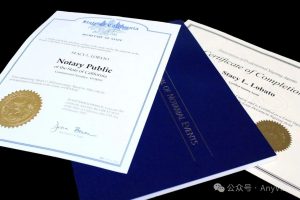
In addition to employment conditions and document preparation, residence records in China are also a very important reference factor during the review process.
The reviewing authority usually examines:
- Passport entry and exit records
- Visa history
to determine whether the applicant has in fact been living and working in China on a long-term basis.
For example, some applicants may satisfy the employment-duration requirement, but because they have been outside China for extended periods, such as:
- Working overseas for long stretches
- Spending most of the year outside China
they may still be asked to provide supplemental explanations during the review process.
Therefore, for those preparing to apply for permanent residence, maintaining stable residence records in China is also very important.

In recent years, we have clearly observed one trend:
more and more foreign nationals who plan to develop their careers in China over the long term are beginning to treat China Permanent Residence as part of their long-term status planning.
Holding a China Green Card means:
✔ No longer needing to renew a work visa frequently, especially in light of the current work visa adjustments: after the age of 60, only Category A work permits will be available, while Category B work permits will no longer be issued
✔ Being able to live and work in China on a stable long-term basis
✔ More convenient entry and exit
✔ Greater flexibility in career development
For many foreign nationals who have lived in China for many years, permanent residence is in fact a highly important long-term immigration status.
Returning to the two applicants mentioned at the beginning of this article:
both of them actually had strong qualifications,
but their files were returned because of certain detail-related issues. Fortunately, such problems can usually be resolved through supplemental documentation or better application planning.
But these two cases also serve as a reminder to many applicants:
a China Permanent Residence application is not merely a simple qualification review.
Very often, what truly affects the outcome of the application is precisely those details that seem insignificant at first glance.
If you:
- are considering applying for China Permanent Residence
- are unsure whether you meet the requirements
- or want to plan your application pathway in advance
you are welcome to contact us at any time.
Early planning can often make the entire application process much smoother.