
The Real Risks Begin When You Resign: Full Guide for Foreign Employees in China in 2026
Many foreign employees assume: as long as they obtain a work visa, working in China is “safe.”
But in reality—
● The real problems often occur on: the day of resignation
● During job-hopping transitions
● When the employer entity changes
● When documents are nearing expiration
Over the past year, more than 60% of the immigration-status issues we handled for foreign employees occurred during resignation and re-employment.
Working in China as a foreign employee has never been a one-time visa application.
It is an end-to-end “status lifecycle management” process.
Today, we will explain it clearly—the complete workflow from onboarding, to in-employment management, to resignation, and finally re-employment.
It is:
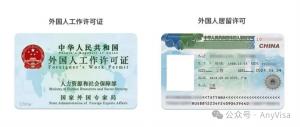
👉 the Foreigner’s Work Permit
China uses a categorized management system (Class A/B/C). The approval logic can be summarized in two words: qualification–role match.
Common reasons for rejection:
● Degree is not relevant to the position
● Insufficient work experience
● Criminal record certificate not notarized/authenticated
● Degree not notarized/authenticated
● Employer not qualified to hire foreign employees
All documents were complete, and the company size met the requirements.
Yet the application was held up.
Reason:
His prior work experience was concentrated in technical R&D, which did not match “marketing management.”
Eventually:
● The job description was adjusted
● Additional explanatory documents were provided
● The approval timeline was extended by nearly one month
The conclusion is clear:
Approvals evaluate job-position logic, not how high your degree is.
If this step is poorly designed, every step afterward becomes reactive.

“If I have a Z visa, I can start working immediately.”
That is incorrect.
A Z visa is only an entry visa.
The truly legal working status consists of:
✔ the Foreigner’s Work Permit
✔ the Work-Type Residence Permit
After entry, you must complete the following within the required timeframe:
1️⃣ Medical examination
2️⃣ Conversion to the formal Work Permit
3️⃣ Application for the Work-Type Residence Permit
All three are mandatory.
the residence permit process was delayed.
When they later applied, they were required to provide a written explanation and pay a fine.
The amount was not large, but a system record was created.
Later, when applying for permanent residence, they were required to submit extra supporting materials.
Many risks do not explode immediately—they become landmines for the future.
The real risks arise when things change.
Risk Point 1: Position Changes Can Trigger “Out-of-Scope Employment”
Promotions and department transfers must be formally updated.
Otherwise, it may be treated as “employment beyond the approved scope.”
Risk Point 2: Employer Entity Changes Can Affect Work Permit Data
Company renaming, legal representative changes, address relocation—
all may impact work permit information.
Many HR teams overlook this.
Risk Point 3: Expiration Management Requires Dual-System Awareness
Work Permits and Residence Permits operate under two different systems.
Renewals should be initiated at least 30 days in advance.
Overdue cases may lead to fines and can affect future application records.

Resignation must include:
✔ Work Permit cancellation
✔ Issuance of a termination/release certificate
✔ Residence Permit modification or shortening
If any step is missed, it will affect the next job.
The former employer’s HR did not cancel the Work Permit in time.
When the new employer submitted the change application, the system showed:
“An active permit already exists; cannot process.”
Communication delays dragged on for three weeks.
The new employer nearly withdrew the offer.
Eventually, the issue was resolved only after completing the cancellation retroactively.
But the entire process was extremely passive.
Resignation is not the end.
It is the starting point of your next job.
“I’m just helping a friend for a while.”
“It’s only part-time.”
Under relevant rules:
● Individuals may be fined
● Employers may be penalized
● Serious cases may result in deportation
● Future applications may be affected
The system is interconnected.
Records can remain for a long time.
a continuous management project.
Not a one-time application.
It is:
onboarding design
→ in-employment maintenance
→ resignation handover
→ re-employment planning
If any link breaks, your future options are impacted.
✔ Track validity periods during employment
✔ Plan ahead before resignation
✔ Build a timeline when changing jobs
✔ Establish document expiry reminders
✔ Synchronize changes promptly when the company information changes
✔ Complete Work Permit cancellation as a mandatory offboarding step

It is at:
● the day of resignation
● during job-hopping transitions
● when documents are nearing expiration
● when the employer entity changes
If you or your company are:
● hiring foreign employees
● planning a job change
● preparing to resign
● seeking a compliance assessment
feel free to reach out for consultation.