
Timing, Job Changes, and Policy Shifts: The 3 Most Touch-and-Go Cases in 2026 Q2
Many people think that the biggest difficulty in applying for permanent residency and work visas is that they do not meet the criteria.
But in fact, in the large number of cases we have encountered, the more common situation is quite the opposite:
The conditions have already been met, but because of timing nodes, job changes, or policy changes, they almost missed the opportunity.
Looking back at the second quarter of 2026, there are three cases that left a particularly deep impression on me. Two permanent residencies and one work visa.
Fortunately, in the end, all applications were successfully completed. But if the problem had been discovered even a little later, the result could have been completely different.

In April this year, a German executive was introduced to me by a friend to consult about applying for Chinese permanent residency.
At the very beginning, he just wanted to understand his situation and see if there was a possibility of applying for permanent residency in the future.
During the communication, he mentioned that he would be transferred from Shanghai to Huzhou at the end of August to start a new work arrangement.
Originally, this was just a normal personnel transfer, but when we further checked his situation, we found a very critical piece of information:
The client had actually already met the conditions for applying for employment-based permanent residency in Shanghai long ago.
Whether it was salary level, tax status, or time working in China, he had already reached the application standards.
In other words, he was not far from applying for permanent residency, but was already standing at the door of application.
When many applicants encounter this situation, their first reaction is often: “Then I will apply in the future.”
But for people who already meet the conditions, the future actually holds more uncertainties.
After the work location changes, will the new career planning be adjusted? Will future policies change? Will the new work arrangement affect subsequent application conditions?
No one can give answers to these questions in advance.
For this client, if he completed the transfer in August first and then turned back to consider the permanent residency application, he might need to face more variables and uncertainties in the next few years.
After understanding the situation, the client quickly made a decision. Not only did he apply himself, but his spouse and three children were also planned together.
In the following month or so, we simultaneously promoted work such as notarization, authentication, and material pre-examination, and finally completed the permanent residency application submission for the family of five in mid-May.
When the client chatted with me a while ago, he mentioned that he has now begun to prepare to go to Huzhou to take up his new post.
As for the matter of permanent residency, he finally no longer has to worry about whether job transfers, policy changes, or other factors will affect his long-term planning in the next few years.
Looking back, the most fortunate part of this case was not that the application had been submitted. But rather that the client, just a few months before the transfer, happened to find out that he already met the application conditions.
Sometimes, planning one step ahead is more important than the conditions themselves.
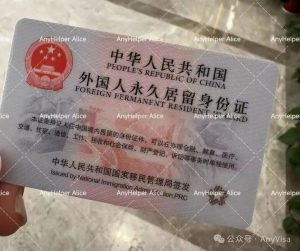
When he found us, he had just experienced a return of his application. The problem occurred in the place that many applicants are most likely to overlook—the residence time in China.
According to the requirements for marriage-based permanent residency applications, applicants need to meet the relevant residence conditions of five consecutive years.
The client had previously completed a large amount of material preparation work and had also handled many notarizations and authentications.
He originally thought that there would be no problem with his application; until he received the result of the returned application.
When we re-checked the client’s entry and exit records for the past five years, we found that his situation was indeed very special.
The residence times in China for the five years were respectively: 273 days, 274 days, 265 days, 262 days, and 270 days.
If you just look at the numbers, many people will feel that the gap does not seem to be large. But permanent residency review is often just like this. Sometimes what is missing is not a year, not a few months, but a few days.
What was even more troublesome was that some of the notarization and authentication documents previously completed by the client were about to expire.
If he continued to wait, not only would the application time be prolonged, but many materials would also need to be handled again.
For the applicant, both the time cost and financial cost would increase significantly.
After taking over the case, we re-organized all the entry and exit records of the client for the past five years and calculated them in combination with the future stay time in China.
From then on, we followed up on the changes in the client’s residence time almost every week, constantly calculating, constantly adjusting, and constantly deducing the most suitable application window.
Ultimately, before some materials were about to expire, we found a time node that fully met the application conditions.
After confirming the time, we immediately completed all material pre-examination and assisted the client in quickly making an appointment for formal submission.
From the first return of the application, to regaining the application qualification, to the final smooth submission of the application, the biggest challenge of the whole process was actually not preparing the materials, but finding that just-right window in a limited time.
This case also reminds us again:
Many times, permanent residency applications do not depend on whether the conditions are excellent, but on whether the conditions are met precisely.
A difference of a few days, and the result may be completely different.

And this client’s situation happened to catch up with the most sensitive time of policy changes.
The client is 66 years old this year and is an important management person of an enterprise. When he found us, his current work visa was only two months away from expiration.
At the same time, intensive international business trip plans had already been arranged for the next few months. He needed to travel back and forth between different countries almost every few weeks. If there was a problem with the extension, it would not only affect his personal identity status, but could also directly affect the enterprise’s business arrangements.
The biggest difficulty at that time was: The client could not meet the Class A talent application requirements for the time being.
The path that could be normally renewed in the past was facing new review changes. The time left for application preparation was not abundant.
After understanding the situation, we communicated with the relevant competent departments where the client was located at the very first moment, explaining the enterprise situation, job responsibilities, and the client’s important role in the enterprise’s operation in detail.
After multiple rounds of communication and coordination, we successfully helped the client strive for a further extension opportunity.
Subsequently, we prioritized completing the work permit extension to ensure that the client’s identity qualification was retained.
Next, according to the client’s arrangement of frequent business trips, we quickly completed the residence permit extension procedures during the intervals of his return to China.
In the whole process, the biggest challenge was not the materials themselves, but time.
The client’s schedule was almost full. Much preparation work needed to be advanced around flights and business trip plans.
Ultimately, none of the client’s international business arrangements were affected, and the work permit and residence permit were also successfully extended.
Later, the client specially sent me a message saying: This was the renewal he was most worried about over the years, but in the end, it turned out to be the smoothest one.

Reviewing these three cases, you will find a very interesting common point.
Their problem was not that the conditions were not enough.
But time.
👉Some people already met the permanent residency conditions, but almost missed the application window because of a job transfer;
👉Some people had their applications returned because of a difference of a few days in residence time;
👉Some people had to re-plan their work visa path because of age and policy changes.
For visa and permanent residency applications, many risks actually do not remind you in advance.
By the time you truly find out, you have often already paid the time cost.
This is also why we have always recommended to clients: If you have already begun to consider permanent residency, work visa extension, or future long-term development plans in China, try to conduct an evaluation in advance.
Because many times, what is truly valuable is not the processing itself, but discovering problems in advance before they happen.
If you also want to evaluate your permanent residency application conditions, work visa status, or whether there are potential risks in your future identity planning, welcome to contact Maggie for consultation.
Perhaps a planning in advance can avoid regrets in the next few years.